PulsarOS Bitten Fruit – Apple-Inspired Landing Page
Published Sep 09, 2026
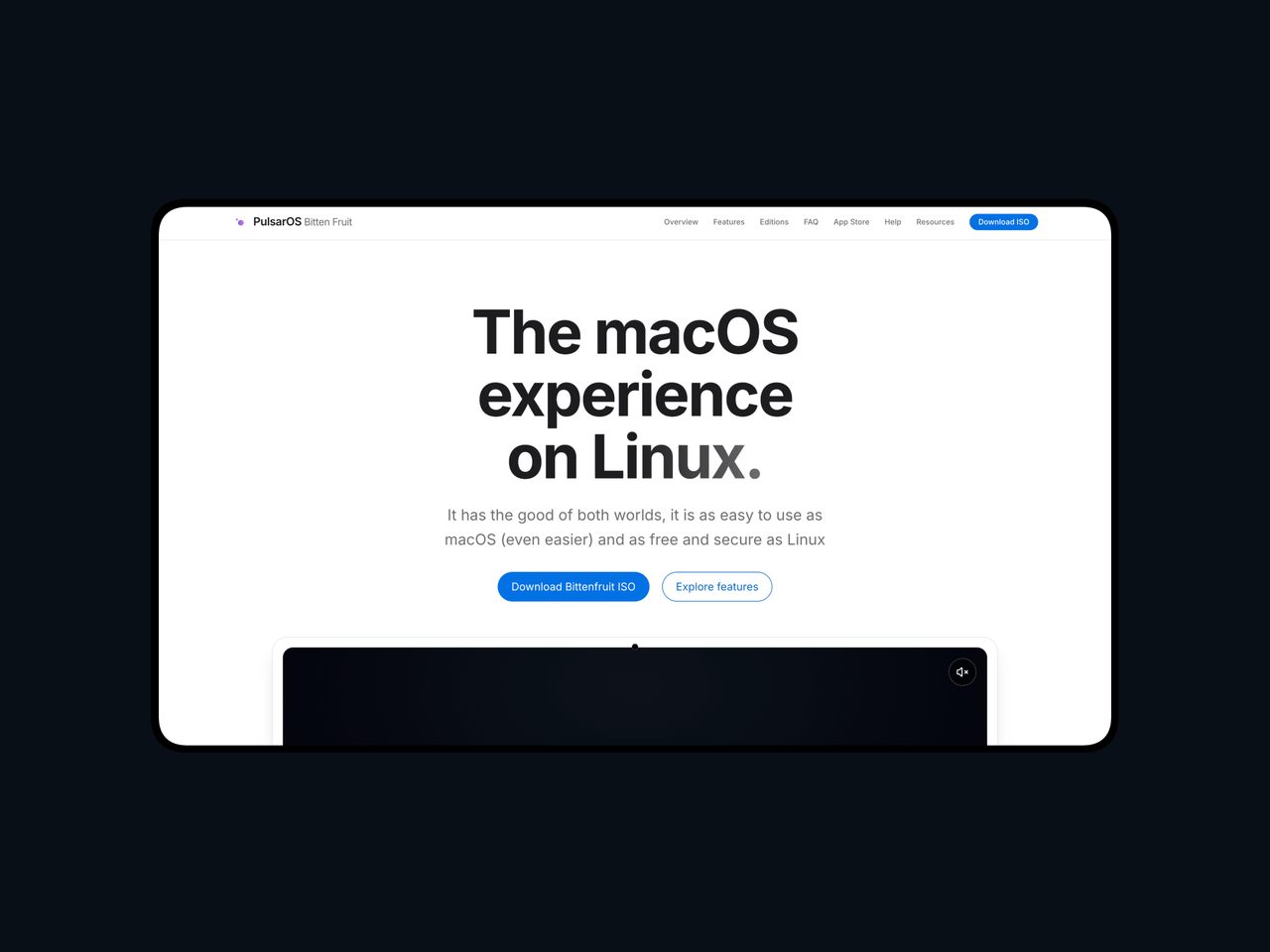
Overview
PulsarOS Bitten Fruit – Apple-Inspired Landing Page
The landing page for PulsarOS Bitten Fruit, a Linux distribution that replicates the macOS experience. Built to feel like an Apple product page — clean animations, deliberate typography, scroll-driven storytelling — while being a fully open-source project for the PulsarOS community.

Table of Contents
Overview
The Challenge
PulsarOS needed a landing page that matched the quality of the product itself — a Linux distro designed to feel like macOS. The existing pages didn't capture the Apple-level polish the project deserved. The goal: build a page that feels like apple.com, with scroll-driven narratives, smooth GSAP animations, and a design system that communicates premium quality for an open-source product.
Key requirements:
- Apple-inspired design language — hero video, feature storytelling sections, edition comparisons, and a clean FAQ.
- Performance-first — Astro's partial hydration means zero client JS where possible, with GSAP only where animations add value.
- SEO & accessibility — semantic HTML, sitemap generation, Open Graph tags, and WCAG-compliant contrast ratios.
- AI-assisted workflow — used opencode as a dev accelerator and a
design.mdfile to keep AI-generated code aligned with the project's visual language.
Screenshots
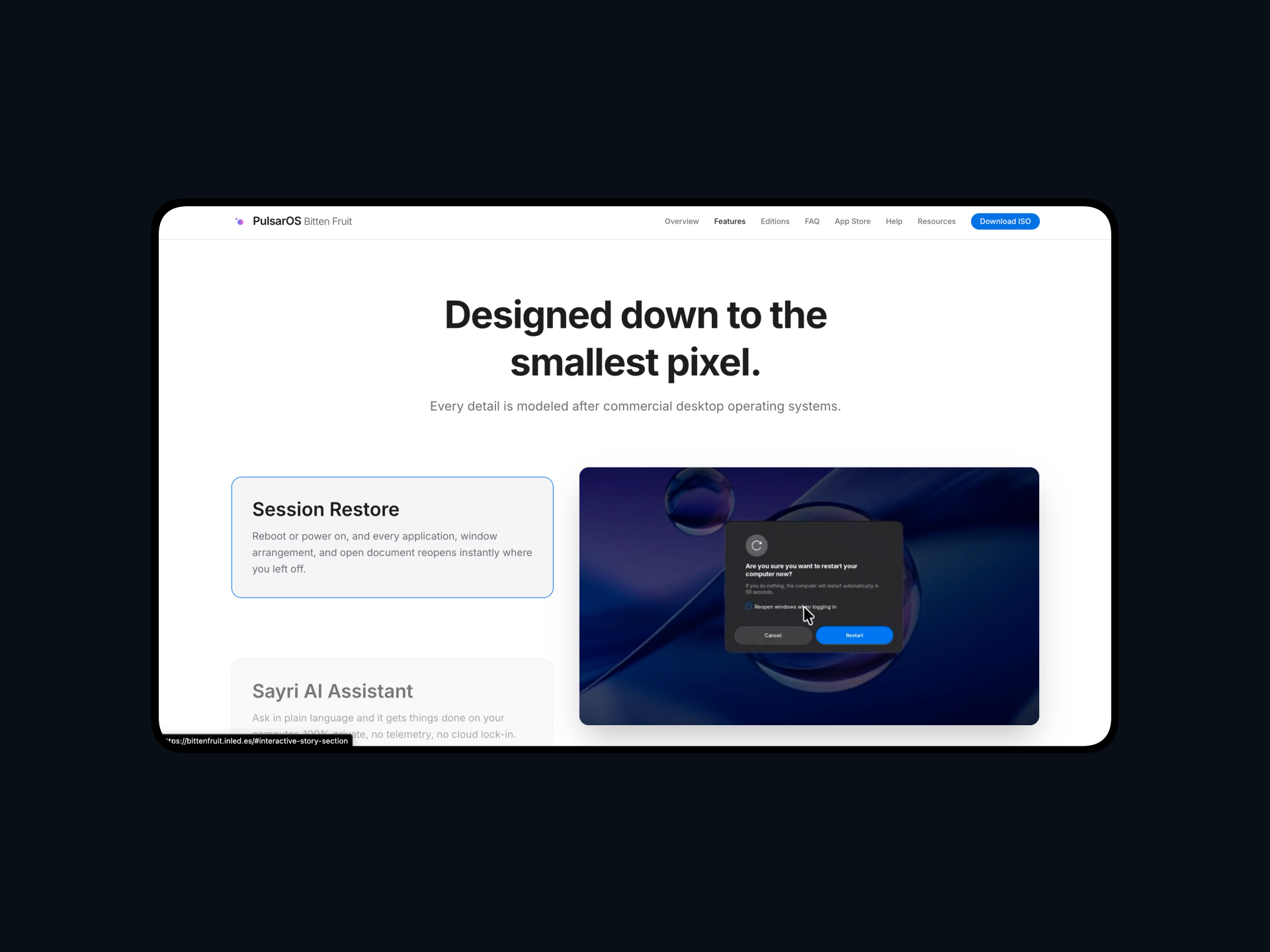
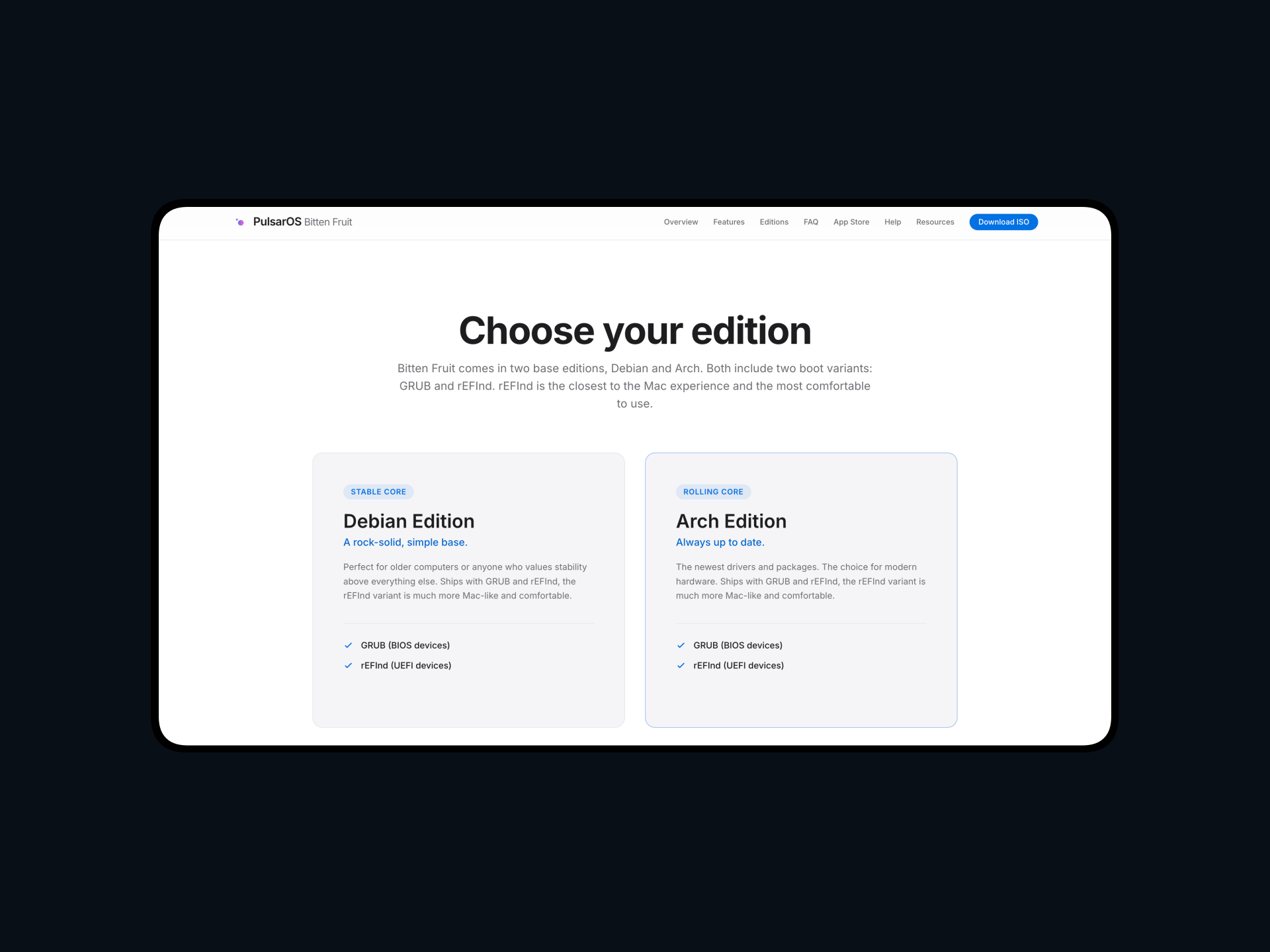
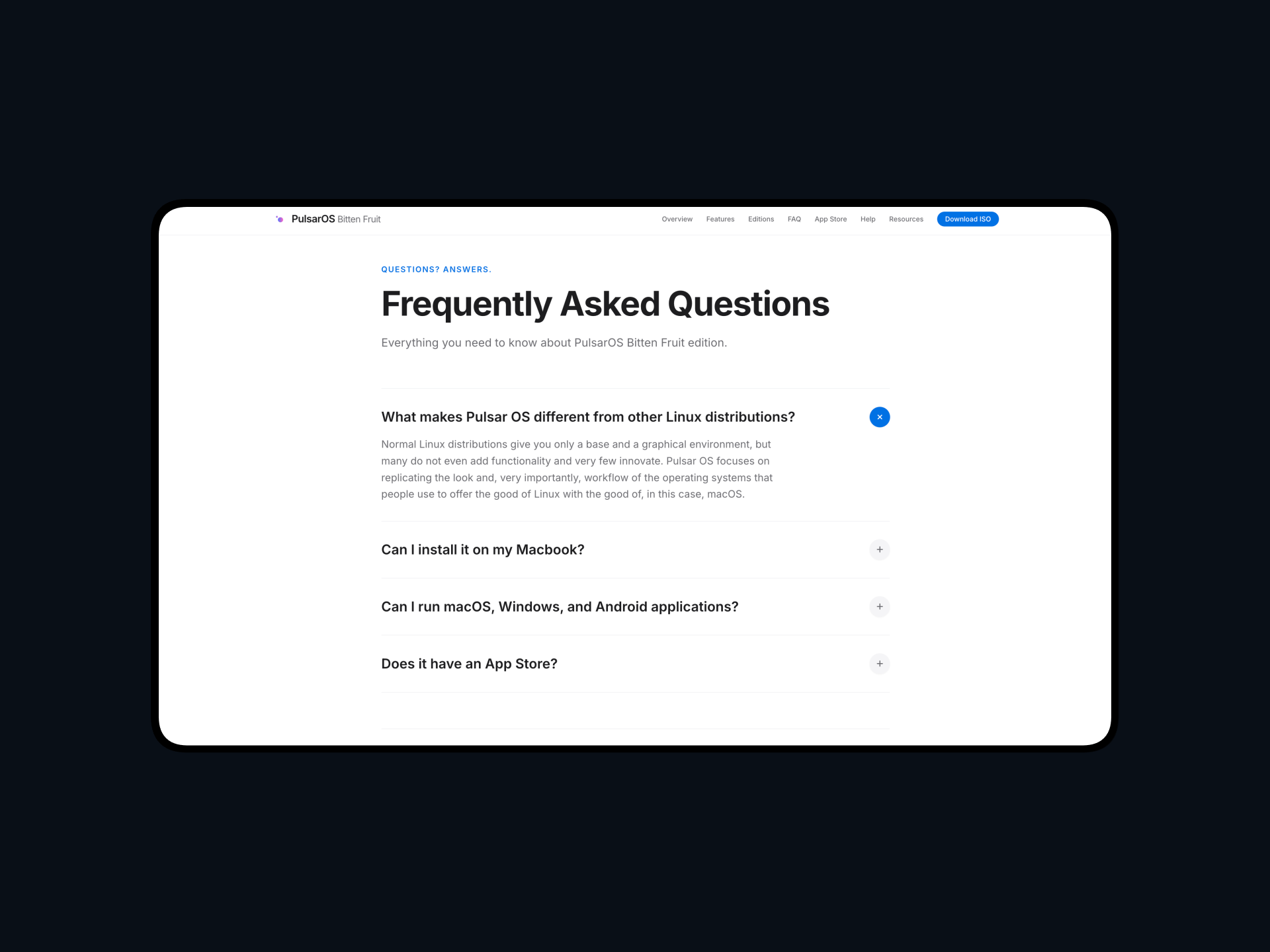
Links
- Live Site: bittenfruit.inled.es
- GitHub: Inled-Pulsar-OS/bittenfruit
My Process
My Role
I served as the tech lead and principal developer, owning the landing page from concept to deployment. My focus:
- Design system — established the visual language using a
design.mdfile that served as the single source of truth for spacing, typography, color tokens, and component patterns. This kept both human and AI-generated code consistent. - Architecture — set up the Astro project with Tailwind CSS v4, GSAP for scroll-driven animations, and TypeScript strict mode. Structured the codebase for easy iteration.
- Animation & UX — implemented the scroll-triggered feature sections, hero video integration, and micro-interactions that give the page its Apple-like feel.
- SEO & performance — integrated
@astrojs/sitemap, Open Graph meta tags, semantic HTML structure, and lazy-loaded media. The page scores high on Lighthouse with minimal client-side JS. - AI-assisted development — used opocode as a pair programmer, feeding it the
design.mdconstraints and Reddit-sourced best practices for SEO and accessibility to accelerate implementation without sacrificing quality.
Built With
- Astro — static site generation with partial hydration
- TypeScript — strict mode for type safety
- Tailwind CSS v4 — utility-first styling with the new Vite plugin
- GSAP — scroll-triggered animations and timeline sequences
- Lucide Icons — consistent icon system
- Sitemap — automatic sitemap generation for SEO
- AI-assisted development via opencode
What I Learned
Building an Apple-quality landing page taught me that design constraints accelerate development — the design.md file became the project's backbone, making every decision (human or AI) consistent. I deepened my understanding of GSAP ScrollTrigger for scroll-driven narratives and learned how Astro's architecture naturally produces performant pages without runtime overhead. The biggest takeaway: open-source projects deserve the same design attention as commercial products, and a well-structured design.md makes that achievable even with AI-assisted workflows.
Tools & technologies
More projects
Let's build something
Have a project in mind? I'm open to freelance work and full-time roles.